How to Find a Beauty Distributor in the United States
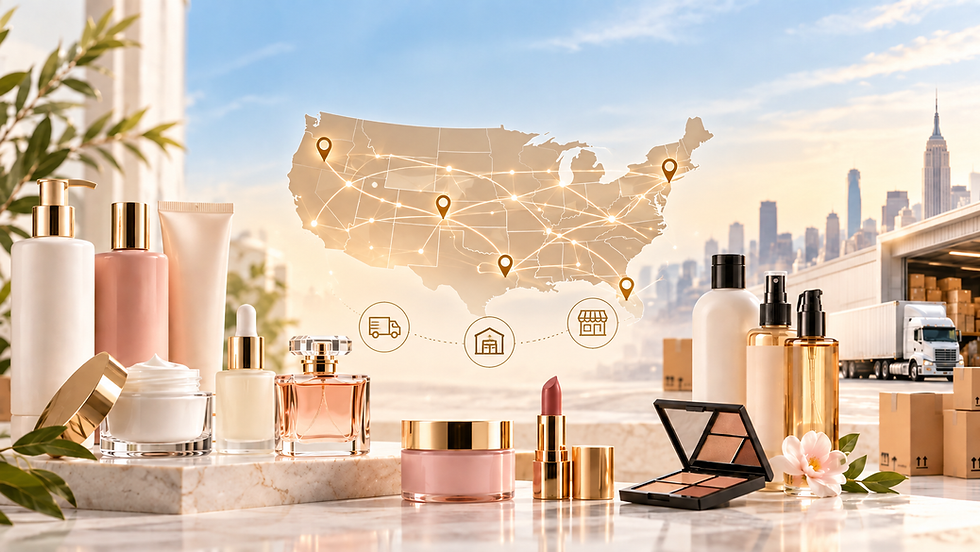
To find a beauty distributor in the USA, decide which sales channels you want, prepare your compliance and commercial documents, shortlist distributors that already carry brands like yours, send a focused pitch, and offer samples before agreeing to a first order. Each step lowers risk for your brand and for the distributor.
This guide is written for brand owners, manufacturers, and suppliers who want U.S. distribution in haircare, skincare, fragrance, or cosmetics. It also explains how a U.S. distributor looks at a new brand, so your pitch answers the questions the distributor is already asking.
Why the Right U.S. Distributor Matters for International Beauty Brands
A U.S. distributor gives a brand a route into the American market without the brand building every retail relationship alone. The partner you choose also affects how your products are positioned, which channels carry them, and how quickly feedback from the market reaches you.
The United States is not one uniform market. Retail stores, e-commerce sellers, professional salon channels, and specialty shops each work differently, and a distributor may be stronger in some of these channels than in others. Distribution agreements can also cover territory, exclusivity, and pricing, so it pays to shortlist carefully and review the terms before you sign.
Step 1: Define the Channels and Categories You Want
Start by deciding where your products should be sold in the United States. A clear target saves time for you and for every distributor you contact, because distributors differ in the categories and channels they serve.
Write down your answers to these questions before you search:
Category: is your range haircare, skincare, fragrance, cosmetics, or a mix?
Channel: do you want retail stores, e-commerce sellers, professional salons and spas, specialty shops, or several of these?
Positioning: is your brand prestige, mass-market, professional, or niche, and how does its price compare with similar brands?
Coverage: do you want national reach or a specific region first?
Relationship: are you open to an exclusive distributor, or do you want to work with more than one partner?
Your answers become the filter for the rest of the process. A distributor that already works with your category and channel will understand your brand faster than one that would have to learn a new segment.
Step 2: Prepare Your Compliance and Commercial Documents
A U.S. distributor wants to know that your products can legally enter and be sold in the United States before it invests time in them. The U.S. Food and Drug Administration (FDA) states that cosmetics offered for import must meet the same FDA laws and regulations as cosmetics made in the United States. Its overview for importing cosmetics is the best place to start.
Review these areas before you pitch:
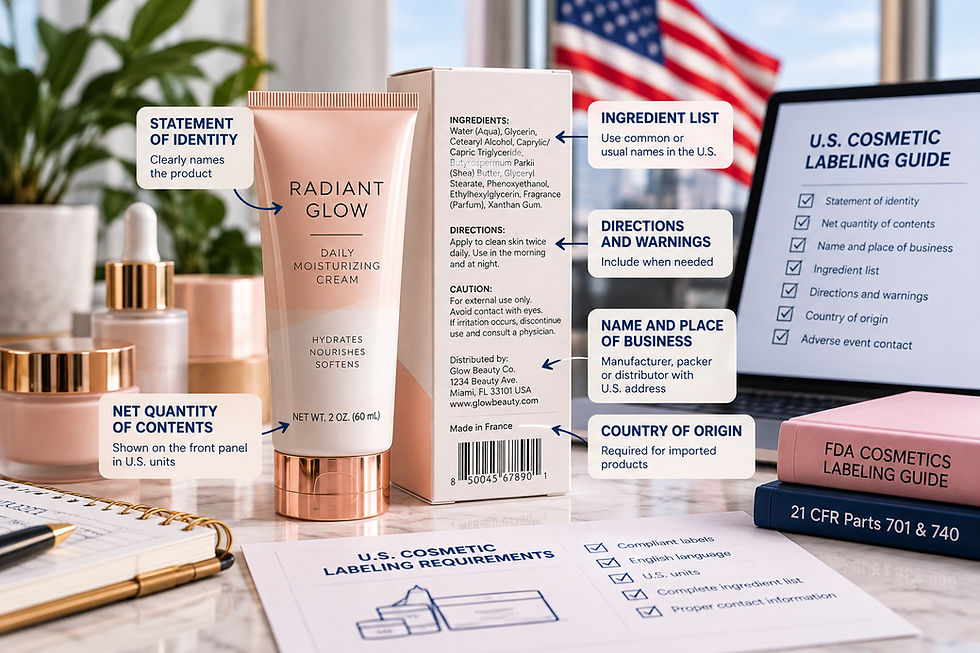
Labeling: the FDA reviews imported product labels to confirm that required information is present, truthful, and in English.
Claims: label claims about treating or preventing disease, or affecting how the body works, can cause a product to be treated as a drug instead of a cosmetic.
Color additives: the FDA allows color additives in cosmetics only when it has approved them for the intended use, and some require certification.
MoCRA: the Modernization of Cosmetics Regulation Act of 2022, added duties such as facility registration, product listing, safety substantiation, and adverse event reporting. The FDA explains them on its MoCRA page. A regulatory specialist can confirm which duties apply to your company and which your U.S. partner can support.
Alongside compliance, prepare the commercial materials a distributor will ask for:
A product catalog with full ingredient lists and product images
An export price list that states the currency and your minimum order terms
A short brand story that explains what makes the brand different
A summary of the markets where the brand is already sold
A description of the marketing support you can offer a U.S. partner
Clear documents let a distributor assess your brand quickly.
Step 3: Shortlist Distributors That Fit Your Brand
Build a short list of distributors that match your category and channel. Useful places to look include:
Trade press announcements of distribution deals between brands and U.S. distributors
B2B directories and industry publications that list beauty distributors
Beauty trade shows and the exhibitor lists that come with them
Distributor websites, which show the categories and brands each company carries
Professional networks such as LinkedIn, where sourcing and brand-partnership contacts are visible
Search results for "distributor" include companies that serve very different customers. Some websites speak to brands, while others are written for store owners who want to buy stock. Check each website for signals before you reach out:
What you find | What it can mean | What to do next |
A page written for brands or suppliers | The company expects inquiries from new brands | Follow the instructions on that page |
Only a wholesale account sign-up for stores | The company may sell to retailers and may not take on new brands | Contact the company and ask whether it reviews new brands |
A list of brands the company carries | A view of its categories and price tiers | Check for overlap with your category and for direct competitors |
No visible contact route for brands | The right contact is unclear | Use a general contact form or LinkedIn and ask who reviews new brands |
Record what you learn in a simple spreadsheet. Note the categories carried, the channels served, any brands that compete with yours, and the contact person, so you can compare options before you send a single message.
Step 4: Pitch the Distributor
Your first message should help the distributor decide quickly whether your brand fits its portfolio. Keep it short, and attach the catalog instead of pasting product details into the email.
A focused pitch covers these points, in this order:
Who you are: brand name, category, country, and website.
What makes the brand different: its positioning, best-known products, and the customer you serve.
Proof you can document: the markets where the brand is already sold and any retail partners or awards you are free to name.
Compliance status: where your labels and documents stand for the U.S. market.
What you are looking for: the channels and regions you want to reach, and whether you are open to exclusivity.
The next step: an offer to send the catalog, price list, and samples.
Address the message to the person who reviews new brands, and mention one specific reason the distributor fits your brand, such as a category it carries or a channel it serves. Avoid a message that could be sent to any distributor without changes. If you do not hear back, a polite follow-up after a reasonable wait is appropriate.
Step 5: Send Samples and Review the Terms
A distributor that is interested may ask to see and test your products. Agree on the details first, so both sides know what happens next:
Which products to send, and in what quantity
Who pays for sample shipping and any import costs
What feedback you will receive, and by when
Whether the samples will go to the distributor's own team or to retail buyers
Samples crossing the border are still shipments of cosmetics, so ask a regulatory specialist or customs broker how U.S. import requirements apply to them before you ship.
Use the sample stage to ask your own questions as well. A distributor's answers show whether it is a good fit for your brand:
Which retailers, e-commerce sellers, or professional channels does it work with today?
Which brands in your category does it carry, and how does it keep them distinct?
What marketing and sales support does it provide to the brands it represents?
How does it handle reorders, returns, and customer complaints?
Step 6: Plan the First Order and the Agreement
When both sides want to move forward, put the main terms in writing before the first shipment. Points to settle include:
Pricing, currency, and payment terms
Minimum order quantities and reorder arrangements
Territory and sales channels
Whether the agreement is exclusive, and for how long
Marketing support and who pays for it
Responsibility for regulatory filings, labeling updates, and complaint handling
Returns, damaged goods, and products that reach their expiry date
Have a lawyer who knows distribution agreements review the contract. A smaller first order can also give both companies a chance to test the market and the working relationship before committing to larger volumes.
What U.S. Distributors Look for in a Beauty Brand
A distributor reviewing a new brand is weighing opportunity against risk. Questions a distributor may ask include:
Does the brand fit alongside the products already in the portfolio, without competing directly with them?
Are the labels, claims, and documents ready for the U.S. market?
Is there room in the pricing for the distributor and for the retailer to earn a margin?
Can the brand supply reorders reliably and ship on schedule?
Will the brand support sales with marketing materials, training, or promotions?
Is there a clear story about who buys the product and why?
If your pitch and your documents answer these questions before the distributor has to ask, the review has less to resolve.
Working With a U.S. Distribution Partner
A distribution partner does more than move boxes. Depending on the agreement, it can introduce your brand to retail and e-commerce buyers, share what it learns from the market, and help you adjust your range, pricing, and presentation for American customers.
Your brand still carries its own responsibilities. You remain accountable for product quality, label accuracy, and the marketing assets that tell the brand story. Agree early on who handles each task, how often you will review sales together, and how either side can raise a problem.
Look for a distributor that wants to build your brand in the U.S. market over time, rather than one that only wants to buy a first order.
Partnering With Samtastic
Samtastic is a U.S. beauty distribution company that works in haircare, skincare, fragrance, and cosmetics. It is looking to work with brands, manufacturers, and suppliers that want U.S. distribution. Brands can review the categories Samtastic works in on the portfolio page.
If your brand is ready for the U.S. market, start with a short introduction that covers your category, your country, and your catalog. Introduce your brand to Samtastic through the contact page to begin the conversation.
Frequently Asked Questions
How do I find a beauty distributor in the USA?
Search trade press, B2B directories, trade show exhibitor lists, and distributor websites. Then check whether each company carries your category, serves your channels, and accepts new brands. Contact the ones that fit with a short pitch and your catalog.
What does a beauty distributor do?
A beauty distributor represents brands in a market and moves their products to businesses that sell to consumers. The exact services, such as sales, warehousing, and marketing support, depend on the agreement between the brand and the distributor.
What is the difference between a distributor and a wholesaler?
The terms vary by company. In general, a distributor works with a brand under an agreement to build its presence in a market, while a wholesaler mainly resells stock to other businesses. Check how each company describes its own role before you contact it.
What should a beauty brand prepare before contacting a U.S. distributor?
Prepare a product catalog with ingredient lists, labels that meet FDA requirements, an export price list, a short brand story, and a summary of the markets where the brand is already sold. A regulatory specialist can confirm which U.S. requirements apply to your products.

Comments